
- News all the latest
- Theme Park explore the park
- Resort tour the resort
- Future looking forward
- History looking back
- Community and meetups
-
ℹ️ Heads up...
This is a popular topic that is fast moving Guest - before posting, please ensure that you check out the first post in the topic for a quick reminder of guidelines, and importantly a summary of the known facts and information so far. Thanks. - Thread starter Maelstrom
- Start date
- Favourite Ride
- Ride to Happiness and Chiapas
- Favourite Ride
- Ug Bugs
- Favourite Ride
- Ug Bugs
- Favourite Ride
- Ug Bugs
You are using an out of date browser. It may not display this or other websites correctly.
You should upgrade or use an alternative browser.
You should upgrade or use an alternative browser.
Paultons Park: General Discussion


Plastic Person
TS Member
I really liked Pulsar myself, but the structure is surprisingly noisy when it's in shaking in operation, which isn't ideal. But I don't think PP will go for this anyway.

Bowser
TS Member
Hypothetically, it could be meandering and have dark ride scenes, with an adjustable splash so as to be not too wet in the colder months.
I’d love something like this (namely The Flying Dutchman at Efteling) but I don’t think it’s realistic for Paultons.
I forgot to mention, when we went on Grampy Sails Boat Ride this week the peppa pig animatronics were working! I’ve never seen this in 3 years of visiting and assumed they were always stationary, even though I could see there was movement potential.
They only worked for one ride of the day though.

owenstreet7
TS Member
I think it depends on what the definition of small is, SuperSplash rides by their very nature are quite tall. Most of them are about 30m or 95ft tall.I wouldn't argue with that, as I don't really like water rides! However, a small SuperSplash would be more appealing to me, personally. Hypothetically, it could be meandering and have dark ride scenes, with an adjustable splash so as to be not too wet in the colder months.
I see what you mean about the PowerSplash, but they are all huge so far (45m). Still, it's not impossible that Mack could make a smaller version for Paultons. It will be really interesting to see what it is! The LIM-launched Water Coaster would be the best, in my opinion.
The shortest one is Aktium in Cinecitta World in Italy which is 20m (66ft).
Bowser
TS Member
Paultons 2026 annual passes are on sale.
They’re advertising “free parking with every pass” but parking is already free so either that’s changing or a bit disingenuous.
From: https://www.instagram.com/p/DTNriOFjIuG
They’re advertising “free parking with every pass” but parking is already free so either that’s changing or a bit disingenuous.
From: https://www.instagram.com/p/DTNriOFjIuG

pluk
TS Member
Paultons 2026 annual passes are on sale.
They’re advertising “free parking with every pass” but parking is already free so either that’s changing or a bit disingenuous.
From: https://www.instagram.com/p/DTNriOFjIuG
I dont think/hope thats not something to read into, it's in line with prevoous years AP ads that mentioned free parking as well as no fastrack to underline the fact that the AP price is all you have to pay, as a way of highlighting it's value even at a higher price point at Merlin parks where additional spending is pretty much a necessity. It isn't very well written/punctuated though.
Last edited:
Now to me, free parking with every pass sounds like charges are incoming.
Hence it is a discount feature of the season pass.
They have to pay for all this new stuff somehow...and I can already hear the line...
"To enhance the overall experience...we are moving in line with other parks...encourage the use of public transport, and will be using the proceeds to enhance the local environment and park facilities...The British Theme Park Community now expect to pay over the odds for parking..."
Hence it is a discount feature of the season pass.
They have to pay for all this new stuff somehow...and I can already hear the line...
"To enhance the overall experience...we are moving in line with other parks...encourage the use of public transport, and will be using the proceeds to enhance the local environment and park facilities...The British Theme Park Community now expect to pay over the odds for parking..."
People moan about parking don't realise how good they have it in USA and Europe you can pay a lot more for parkingNow to me, free parking with every pass sounds like charges are incoming.
Hence it is a discount feature of the season pass.
They have to pay for all this new stuff somehow...and I can already hear the line...
"To enhance the overall experience...we are moving in line with other parks...encourage the use of public transport, and will be using the proceeds to enhance the local environment and park facilities...The British Theme Park Community now expect to pay over the odds for parking..."

AT86
TS Member
People moan about parking don't realise how good they have it in USA and Europe you can pay a lot more for parking
It doesn’t have to be a race to the bottom you know.

Absolutely no relevance whatsoever.People moan about parking don't realise how good they have it in USA and Europe you can pay a lot more for parking
And, again, a lack of punctuation means your opinion isn't being put across very clearly.
Unless Paultons is planning a move offshore?
And I didn't really know the politics of it...but Labour are pro car park charging?
News to me.
All parks.pay for thier car parking in business rates. Each individual space is ratable it's just up to the parks to decide if they want to pass on that cost. Spaces with charging points which are being installed in many theme parks are even more expensive tax wise so I don't see any situation where the cost doesn't continually increaseAbsolutely no relevance whatsoever.
And, again, a lack of punctuation means your opinion isn't being put across very clearly.
Unless Paultons is planning a move offshore?
And I didn't really know the politics of it...but Labour are pro car park charging?
News to me.

GooseOnTheLoose
TS Member
Paultons 2026 annual passes are on sale.
They’re advertising “free parking with every pass” but parking is already free so either that’s changing or a bit disingenuous.
From: https://www.instagram.com/p/DTNriOFjIuG
I wouldn't read the tea leaves of a graphical intern's bullet points too closely. If you attempt to purchase a standard day ticket for the 2026 season on their website right now, it still proudly displays "Free parking included" as a key selling point.
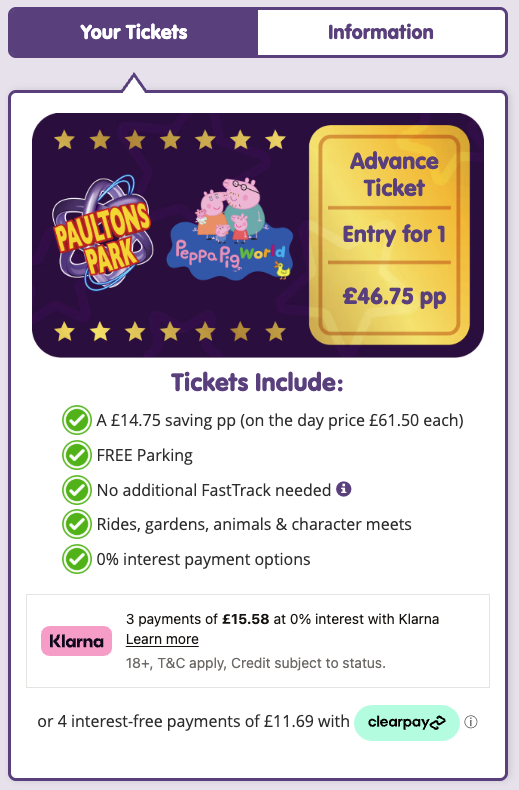
It is marketing padding. They are listing the status quo as a "perk" to make the list look longer. It is the equivalent of a hotel advertising "free oxygen in every room". I agree that it's disingenuous.
However, let's not pretend that Paultons are running a charity. They just structure their yield differently.
Alton Towers (2026 Season):
Ticket: £34 (Online Advance)
Standard Parking: £12
Total: £46.00
Paultons Park (2026 Season):
Ticket: £46.75 (Online Advance)
Parking: £0.00
Total: £46.75
You are paying for the parking at Paultons; they just force you to pay for it whether you bring a car or not. It's the Ryanair vs BA model. One unbundles everything to show a lower headline price, and the other bundles it all in to appear "premium" (and avoid the bad PR of a barrier charge).
That is not how Business Rates work.All parks.pay for thier car parking in business rates. Each individual space is ratable it's just up to the parks to decide if they want to pass on that cost.
The Valuation Office Agency does not walk around Paultons Park counting individual parking bays and sending a bill per tarmac rectangle. Theme parks are valued using the Receipts and Expenditure method. The rateable value is derived from the trading potential of the entire property (the hereditament), not by itemising individual assets like parking spaces or toilets.
The government currently offers 100% first year capital allowances for expenditure on electric vehicle charging points. Installing them is actually a tax efficient way to invest capital, not a tax burden.Spaces with charging points which are being installed in many theme parks are even more expensive tax wise so I don't see any situation where the cost doesn't continually increase
Per ticket Alton is cheaper because parking charge can allow 4 to 7 in 1 car to pay £12 and Paultons per ticket £12 is per head in the groupAlton Towers (2026 Season):
Ticket: £34 (Online Advance)
Standard Parking: £12
Total: £46.00
Paultons Park (2026 Season):
Ticket: £46.75 (Online Advance)
Parking: £0.00
Total: £46.75
Bowser
TS Member
You are paying for the parking at Paultons; they just force you to pay for it whether you bring a car or not. It's the Ryanair vs BA model. One unbundles everything to show a lower headline price, and the other bundles it all in to appear "premium" (and avoid the bad PR of a barrier charge).
I don't think that's an apt comparison personally. The unbundled airline model allows people to achieve the lower price as long as they're prepared to inconvenience themselves in a variety of ways.
And as our good friend @Hid has managed to point out whilst i'm mid-typing, the theme park model in this instance only really applies to solo visitors.
The other major difference between the companies remains in the annual pass model. The equivalent Paultons to Merlin passes are significantly more expensive and only allow access to one park compared to the many Merlin attractions offered. Would love to know what the difference in uptake is.
GooseOnTheLoose
TS Member
It creates a rather perverse economic reality where the only demographic getting a true "deal" at Paultons is the solitary driver. I am not sure that incentivising solo travel in private vehicles aligns perfectly with their environmental credentials, but it certainly helps the bottom line.I don't think that's an apt comparison personally. The unbundled airline model allows people to achieve the lower price as long as they're prepared to inconvenience themselves in a variety of ways.
And as our good friend @Hid has managed to point out whilst i'm mid-typing, the theme park model in this instance only really applies to solo visitors.
The difference in uptake will be massive, but that is by design. They are selling two fundamentally different products.The other major difference between the companies remains in the annual pass model. The equivalent Paultons to Merlin passes are significantly more expensive and only allow access to one park compared to the many Merlin attractions offered. Would love to know what the difference in uptake is.
The Merlin Annual Pass is a volume driver. It's the same as the gym membership model. They want as many people as possible to sign up, paying a monthly fee that they barely notice, providing a guaranteed baseline of cash flow. They accept that this dilutes the gate yield, but they bank on making it back via "secondary spend" (Fastrack, midway games, hotel stays). The pass isn't the profit; the pass is the hook to get you into the shop, which admittedly feels a little outdated when your primary driver of secondary spend (food and beverage) is outsourced.
Paultons Park's pass is the profit. They don't have Fastrack to upsell. They don't have games on every corner. They don't have a portfolio of 30 other attractions to spread the cost over. The pass itself has to pay its way. Keeping the price high allows Paultons Park to naturally limit the uptake to a manageable number of local families who treat it as a premium club.
Paultons likely doesn't want Merlin's uptake numbers. If they had 100,000 pass holders trying to get into the park on a sunny Saturday, their operational model (which relies on efficiency and atmosphere rather than brute capacity) would collapse. They are charging a premium to keep the numbers low, effectively allowing the guests to pay for the privilege of a quieter park.
It is the difference between a subscription to Netflix (Merlin: everything, everywhere, all at once) and buying a ticket to the Royal Opera House (Paultons: expensive, limited, but supposedly a 'better' class of entertainment).
Bowser
TS Member
It is the difference between a subscription to Netflix (Merlin: everything, everywhere, all at once) and buying a ticket to the Royal Opera House (Paultons: expensive, limited, but supposedly a 'better' class of entertainment).
Now there’s an apt comparison

No, the valuation office does not walk around anywhere these days not that I implied they did. I know because I work with them regularly. Car spaces are rated individually but for theme parks they are park of the overall assessment however the point still stands.I wouldn't read the tea leaves of a graphical intern's bullet points too closely. If you attempt to purchase a standard day ticket for the 2026 season on their website right now, it still proudly displays "Free parking included" as a key selling point.
It is marketing padding. They are listing the status quo as a "perk" to make the list look longer. It is the equivalent of a hotel advertising "free oxygen in every room". I agree that it's disingenuous.
However, let's not pretend that Paultons are running a charity. They just structure their yield differently.
Alton Towers (2026 Season):
Ticket: £34 (Online Advance)
Standard Parking: £12
Total: £46.00
Paultons Park (2026 Season):
Ticket: £46.75 (Online Advance)
Parking: £0.00
Total: £46.75
You are paying for the parking at Paultons; they just force you to pay for it whether you bring a car or not. It's the Ryanair vs BA model. One unbundles everything to show a lower headline price, and the other bundles it all in to appear "premium" (and avoid the bad PR of a barrier charge).
That is not how Business Rates work.
The Valuation Office Agency does not walk around Paultons Park counting individual parking bays and sending a bill per tarmac rectangle. Theme parks are valued using the Receipts and Expenditure method. The rateable value is derived from the trading potential of the entire property (the hereditament), not by itemising individual assets like parking spaces or toilets.
The government currently offers 100% first year capital allowances for expenditure on electric vehicle charging points. Installing them is actually a tax efficient way to invest capital, not a tax burden.
The Valuation office are also looking at spaces with charging points and they are rated higher so long term they are more expensive than a standard space irrespective of how they cost. It's up to the park how that cost is passed on, hence the differences in season passes though in honesty it's all smoke and mirrors, you either pay on the day or as part of your ticket price.
GooseOnTheLoose
TS Member
If we are going to get into the weeds of the Valuation Office Agency's practice notes, we should probably be precise.No, the valuation office does not walk around anywhere these days not that I implied they did. I know because I work with them regularly. Car spaces are rated individually but for theme parks they are park of the overall assessment however the point still stands.
Whilst you are correct that car parking spaces can be rated individually (typically for office blocks or standalone commercial car parks), for a theme park valued under the Receipts and Expenditure method, the parking is not rated on a "per space" basis. It is rated based on the trading potential of the hereditament.
The "cost" of the car park in business rates terms is directly linked to the revenue it generates.
If Paultons charges £0 for parking, the direct revenue from that asset is zero. It contributes to the overall attractiveness of the park, which drives gate receipts, but it doesn't create a separate pile of cash for the VOA to tax.
If Alton Towers charges £12 per car, they are generating millions in specific parking revenue. That revenue increases their Fair Maintainable Trade, which in turn increases their Rateable Value, which increases their Business Rates bill.
Merlin, by charging for parking, actually increases their tax liability compared to bundling it, because they are extracting more cash from the customer overall. Paultons aren't "passing on the cost" of the space. They are avoiding generating a taxable revenue stream from it in the first place (whilst inflating the gate price to compensate, which is taxable, so it balances out).
The installation of EV infrastructure currently attracts 100% First Year Allowances (capital allowances) against Corporation Tax. It is one of the few things the government actually pays businesses to build. Whilst the VOA might eventually decide to rate them higher, right now they are a tax shield, not a burden.The Valuation office are also looking at spaces with charging points and they are rated higher so long term they are more expensive than a standard space irrespective of how they cost. It's up to the park how that cost is passed on, hence the differences in season passes though in honesty it's all smoke and mirrors, you either pay on the day or as part of your ticket price.
We are in violent agreement on your final point, however. Whether it is itemised on the receipt or hidden in the ticket price, the customer always pays for the tarmac they park on. Paultons just hide it better.